
AC Service and Installation: What You Need to Know
Understanding AC service and installation helps Seattle-area homeowners decide whether they need a repair, routine maintenance, or a new system. This guide covers common warning signs, when to consider repair or replacement, and cooling options for different homes. It also explains sizing, cost factors, and what to ask before approving an installation proposal.
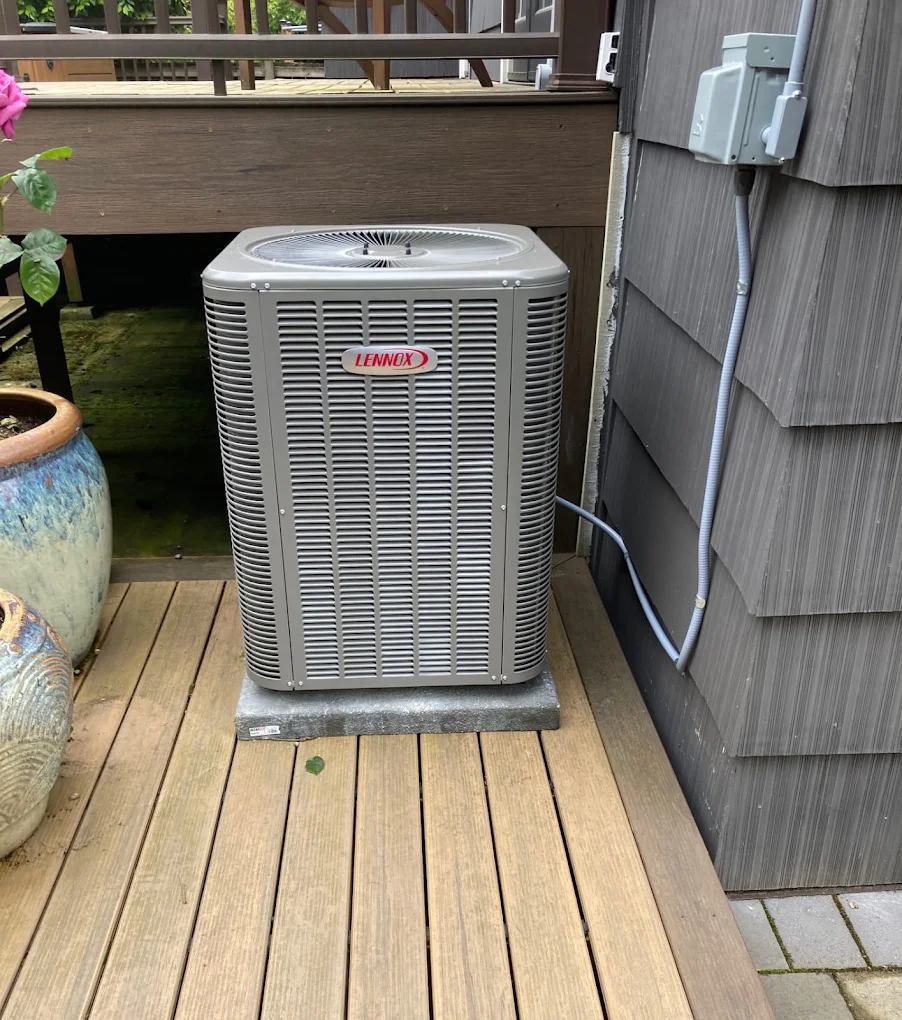
AC service and installation include diagnosing and repairing cooling problems, maintaining working equipment, and adding or replacing a system. If your AC is struggling, start with a diagnosis. If it works well, plan preventive maintenance. For Seattle homeowners adding cooling, the next step is an assessment of the home.
What does AC service and installation include?
AC service can mean troubleshooting a problem or performing preventive maintenance. Installation is a separate project to add cooling or replace equipment. These services have different purposes:
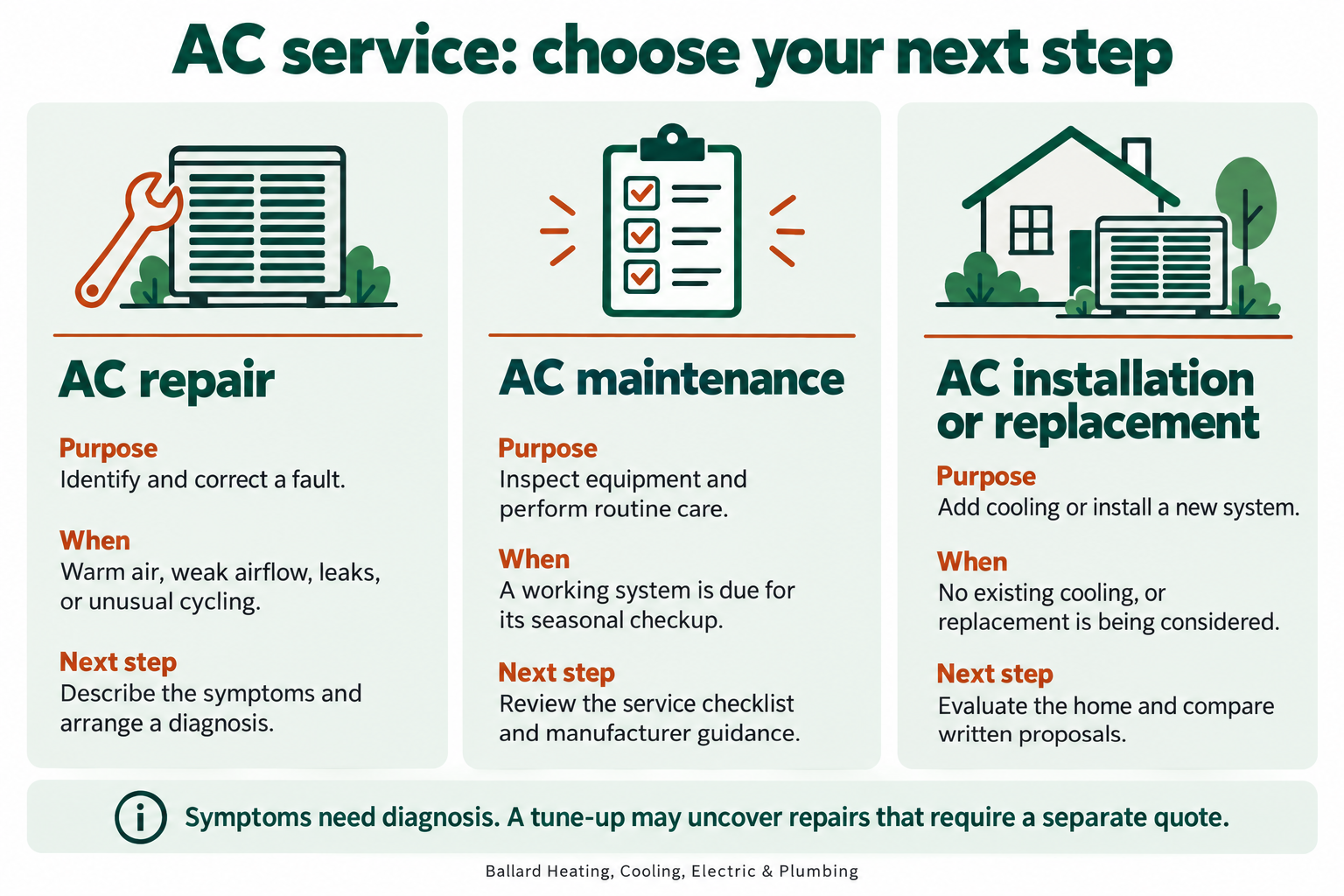
A tune-up does not automatically include every repair discovered during the visit. Clarify the appointment’s scope and how additional work will be quoted.
How do you know when your air conditioner needs repair?
Changes in cooling, airflow, sound, drainage, or cycling can signal a problem. Symptoms worth investigating include:
- Air that stays warm while the thermostat calls for cooling.
- Noticeably weaker airflow from vents or indoor units.
- New grinding, rattling, buzzing, or other unusual noises.
- Water leaking around indoor equipment.
- Ice on visible refrigerant tubing or cooling components.
- Repeated short starts and stops, known as short cycling.
These signs do not identify a failed part on their own. For example, poor cooling and ice can involve restricted airflow or a refrigerant issue. A technician needs to determine the cause before recommending a repair.
Why is the AC running but not cooling the house?
A running fan does not necessarily mean the system is removing heat. Possible causes include incorrect thermostat settings, a clogged filter, obstructed outdoor equipment, a frozen indoor coil, refrigerant loss, or a malfunctioning component.
Notice whether every room is warm or the problem is concentrated upstairs. Also note when it began and whether cooling has changed suddenly or gradually. Those observations help a technician investigate; they do not establish that the system needs replacement.
What can you safely check before calling?
Keep homeowner troubleshooting to accessible controls and routine care:
- Check the thermostat. Confirm cooling mode and a temperature setting below the room temperature. Fan-only operation will circulate air without cooling it.
- Inspect the filter. Follow the manufacturer’s instructions for safe access, cleaning or replacement, and the correct filter type.
- Check supply and return vents. Move furniture, rugs, or curtains blocking airflow.
- Look around the outdoor unit. Keep the surrounding area clear of vegetation and loose debris, following the manufacturer’s clearance instructions. Do not remove equipment panels.
If you see ice, switch cooling off and have the cause checked before resuming operation. Leave refrigerant work, electrical repairs, and internal component diagnosis to qualified professionals. When basic checks do not resolve the problem, professional AC repair can establish what needs attention.
How often should an air conditioner be serviced?
Plan professional AC maintenance annually, preferably before the cooling season, and follow the equipment manufacturer’s guidance. ENERGY STAR recommends annual preseason checkups, including cooling service in spring. Ballard also recommends spring AC maintenance.
For Seattle and Puget Sound homeowners, planning ahead means there is time to discuss any findings before warmer weather makes cooling a daily priority. A heat pump used for both heating and cooling needs a maintenance schedule that accounts for both seasons and its manufacturer’s requirements.
What should an AC tune-up include?
A useful tune-up checks how the equipment operates, supports airflow and drainage, and identifies conditions that need attention. General maintenance guidance includes checking controls, electrical connections, coils, refrigerant charge, and blower operation; the included tasks depend on the equipment and service agreement.
Ballard’s published AC maintenance and tune-ups checklist includes:
- Drainage: cleaning the condensate drain and testing the condensate pump.
- Airflow: inspecting filtration and adjusting blower components.
- Refrigerant: inspecting for leaks and monitoring pressure.
- Electrical operation: checking and tightening connections, plus measuring amperage and voltage.
- Cooling performance: measuring the air-temperature difference and inspecting the evaporator coil when accessible.
These checks help evaluate water removal, air movement, and operating conditions. The evaporator is the indoor coil that absorbs heat during cooling. Inspection does not automatically mean replacement or repair; ask which findings need action and what that work includes.
Should you repair or replace your air conditioner?
Compare the specific repair with the system’s overall condition and your plans for the home. A single breakdown, an older installation date, or one uncomfortable room is not enough to decide.
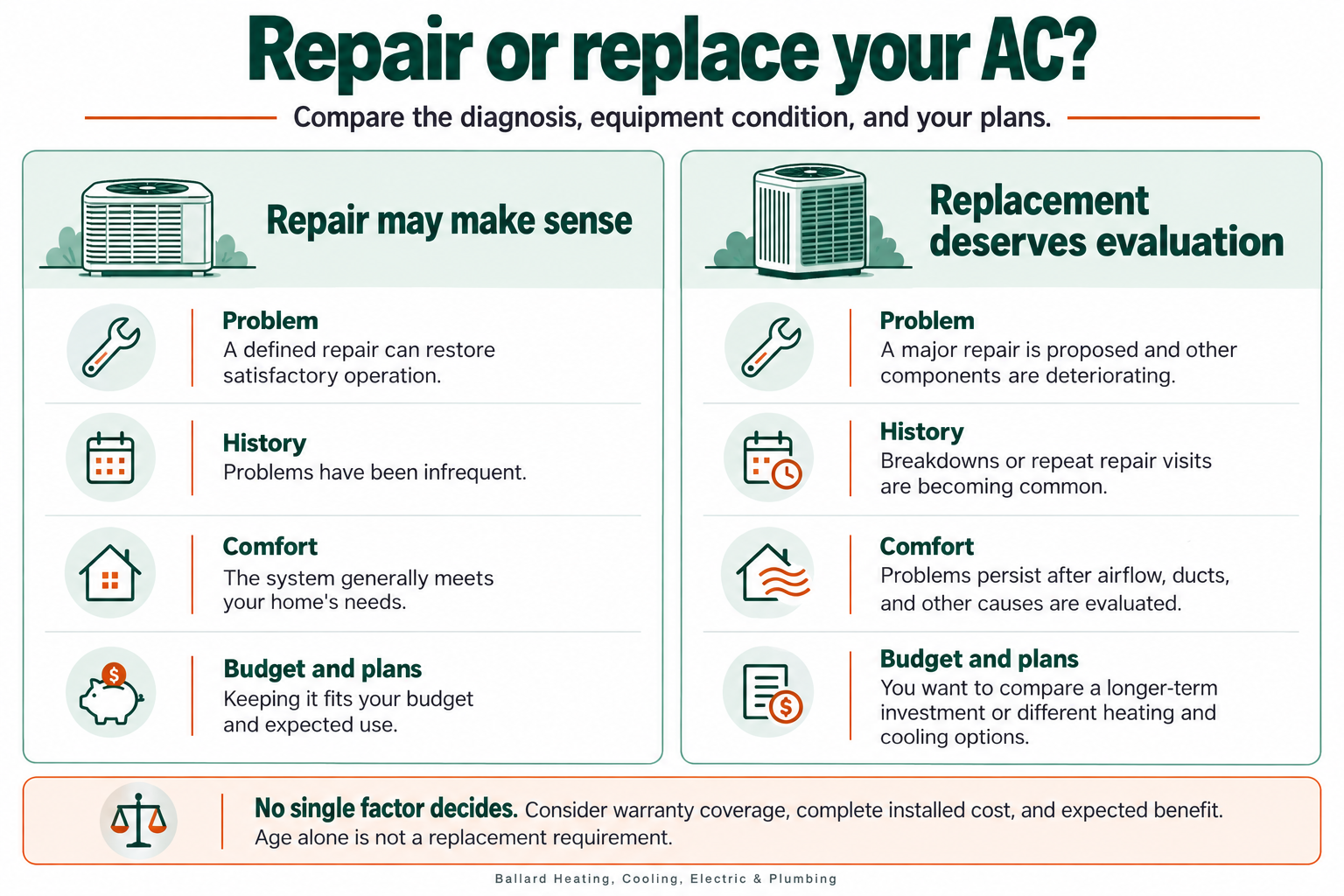
Include warranty coverage in the comparison: what parts or labor are covered, and what would you pay? For replacement, compare the complete installed scope with the expected benefit, rather than comparing only equipment prices.
An increased utility bill also deserves context. Compare electricity use, rates, weather, and thermostat habits before attributing the change to equipment failure.
How long can an air conditioner last?
There is no universal replacement deadline. Installation quality, sizing, maintenance, operating hours, and exposure all influence useful life. Age is helpful background, but an inspection of the actual equipment is more useful for deciding whether a proposed repair is worthwhile.
Which cooling system fits your home?
The main questions are whether you want cooling alone or heating and cooling, and whether suitable ductwork is available. A heat pump can use ducts or deliver comfort through ductless indoor units.

Heat pumps move heat out of the home in cooling mode and can reverse that process to provide heat. For a Seattle home with baseboard or radiator heat, ductless mini-split installation can add cooling without installing distribution ducts. An upstairs room may also be a candidate, depending on the cause of its comfort problem and the home’s layout.
Indoor-unit placement and the number of zones matter. One unit in a hallway should not be assumed to cool every closed bedroom adequately. If a heat pump will also provide winter heating, discuss its heating capacity and any need to coordinate with another heat source.
How is the right size air conditioner determined?
Capacity should follow a professional cooling-load assessment: an estimate of how much heat the home needs to remove. Floor area is only one input. Insulation, windows, sun exposure, ceiling height, air leakage, and room layout also matter.
Ask how the contractor calculated the load and checked duct capacity and airflow. Simply copying the old system’s size can preserve an earlier sizing problem. Oversized equipment may cycle too frequently, while undersized equipment may struggle to meet demand. ENERGY STAR’s quality-installation guidance emphasizes sizing, airflow, refrigerant charge, and duct evaluation together.
What do SEER2, comfort, and noise tell you?
SEER2 means Seasonal Energy Efficiency Ratio 2. It compares seasonal cooling output with electricity use under standardized testing. A higher rating indicates greater rated cooling efficiency, but it does not predict your exact bill. Compare SEER2 ratings with other SEER2 ratings; older SEER numbers use different test conditions.
Operating costs also depend on runtime, electricity rates, thermostat settings, installation, and the home itself. Ask how the proposed efficiency level fits your expected cooling use.
Comfort and sound deserve separate attention. Variable-speed equipment can adjust output as demand changes and may provide steadier temperatures and quieter operation. Ask for the proposed equipment’s sound specifications and discuss outdoor-unit placement near bedrooms, patios, and neighboring homes. SEER2 is not a noise rating.
What affects the cost of AC repair or installation?
Repair costs depend on what failed and what is required to correct it. Installation costs depend on the equipment and the work needed to make it function properly in the home.
For AC repair, the estimate should explain diagnosis, parts, labor, access, and any refrigerant-related work. Ask whether warranty coverage changes your out-of-pocket cost.
For air conditioning installation, compare:
- Equipment type, capacity, efficiency, controls, and number of zones.
- Whether existing ducts can be used or need modification.
- Electrical requirements and any work needed to meet them.
- Refrigerant-line routing, condensate drainage, and equipment access.
- Removal of old equipment, preparation, startup testing, and other included work.
These are items to clarify in a proposal, not a fixed price formula. A replacement using suitable existing infrastructure has a different scope from adding cooling to a home for the first time. Written inclusions and exclusions make estimates more useful than a headline equipment price.
What happens during AC installation?
Installation typically moves from home evaluation and equipment selection to preparation, installation, testing, and homeowner instruction. The details depend on the system and the work included in the proposal.
- Evaluate the home. Review comfort goals, cooling needs, existing equipment, ducts, electrical capacity, and possible equipment locations.
- Select equipment and define the work. Compare options, document the proposed system, and clarify responsibilities for any required permits or inspections.
- Prepare and install. Complete the agreed removal, equipment placement, connections, drainage, and duct or electrical work.
- Verify operation. Discuss how the contractor will check airflow, refrigerant charge, controls, drainage, and cooling performance. Proper component matching and setup matter to the finished system’s performance.
- Review operation and care. Go over thermostat use, filter access, maintenance needs, equipment documents, and warranty information.
There is no single completion time for every project. Equipment availability, access, additional trades, new ductwork, and inspection scheduling can affect the timeline. The proposal for air conditioner installation and replacement should explain the expected sequence and any anticipated interruption to comfort.
What should you ask before approving a proposal?
A clear proposal should identify the equipment, explain the scope, and show how the completed installation will be checked. Use these questions:
- Equipment and sizing: What models, capacity, efficiency ratings, and controls are included? What home assessment supports the selection?
- Included work: What happens to existing ducts and electrical connections? Are drainage, equipment removal, and any required permits included?
- Completion: What could affect the schedule, and what final testing will be performed?
- Coverage and care: What equipment and labor warranties apply? What maintenance or registration requirements must you follow?
- Price: What is excluded, and how will changes be priced and approved?
Where does Ballard provide AC service?
Ballard Heating, Cooling, Electric & Plumbing serves Seattle and surrounding Puget Sound communities in King and Snohomish counties, including Lynnwood, Redmond, Bellevue, and Shoreline. The company has served the region since 1993, repairs and maintains all HVAC brands, and offers air conditioner, heat pump, and ductless services.
FAQs
Does an AC need maintenance if it is used only a few weeks each year?
Yes. Even a lightly used AC should follow its manufacturer’s maintenance schedule. Annual preseason checkups remain a useful baseline, with care adjusted to the equipment’s condition. Routine filter checks and keeping the outdoor area clear still matter.
Does AC refrigerant need to be topped up every year?
No. Refrigerant circulates in a closed system and is not normally consumed. If the charge is low, a qualified technician should investigate the cause, including possible leaks, and determine the appropriate correction. Adding refrigerant alone does not repair a leak.
Does a hot upstairs room mean I need a bigger air conditioner?
Not necessarily. Airflow, duct condition, sun exposure, insulation, and room layout should be evaluated first. Depending on the findings, the solution could involve the existing system, improvements to the home, or separate cooling for that space.
Does replacing central AC mean replacing all the ducts?
No. Existing ducts should be evaluated for condition, leakage, and suitability for the proposed system. Some homes may need repairs or modifications; complete replacement should follow the assessment rather than be assumed.
Can a ductless mini-split heat pump cool and heat the same room?
Yes. A ductless mini-split heat pump provides cooling in warm weather and heating in cooler weather. The equipment and indoor-unit layout should be selected for the room’s needs in both seasons.
Get help choosing the right AC service for your home
For help determining whether your home needs AC repair, maintenance, or a new-system consultation, contact Ballard at 206-784-8101. Ballard Heating, Cooling, Electric & Plumbing can help you understand your options and choose a practical next step.
Financing options available
Flexible financing options for home upgrades.