
Backup Generator for Holiday Plans in Puget
A backup generator can help keep designated household systems running when an outage interrupts Thanksgiving preparations. Learn how Puget Sound homeowners can plan for refrigeration, heating, lighting, and selected cooking needs, compare portable and standby options, and prepare for installation or maintenance. The guide also covers food safety and essential precautions for operating a generator.
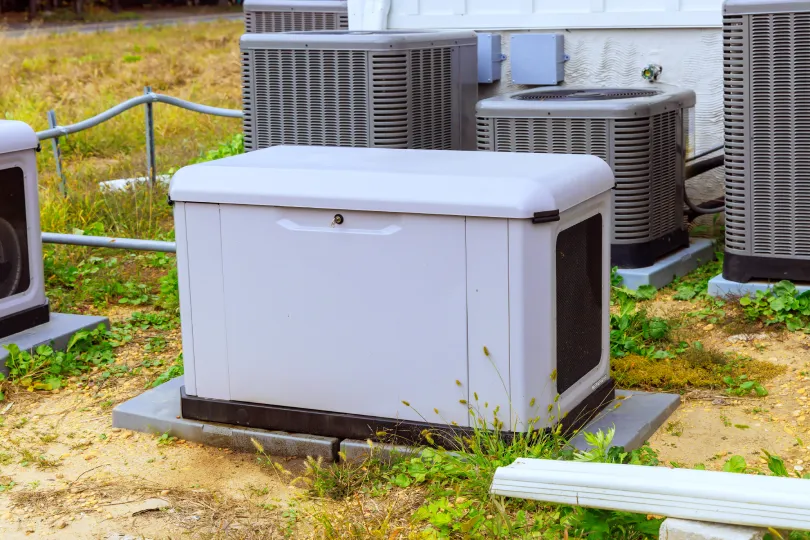
A properly selected, installed, fueled, and maintained backup generator can keep designated household systems operating during an outage. For Thanksgiving hosts, that can mean cold groceries, a heated home, working lights, and power for the cooking equipment included in the backup plan. The key is deciding what needs power before guests arrive.
That preparation makes sense in Puget Sound: Washington’s Department of Health identifies fall and winter windstorms as a cause of electricity loss across the Pacific Northwest.
What can a backup generator power during Thanksgiving?
A generator can supply the appliances and circuits included in the backup-power system, within its capacity. Start with the essentials for your household, then decide which cooking and entertainment conveniences belong in the plan.
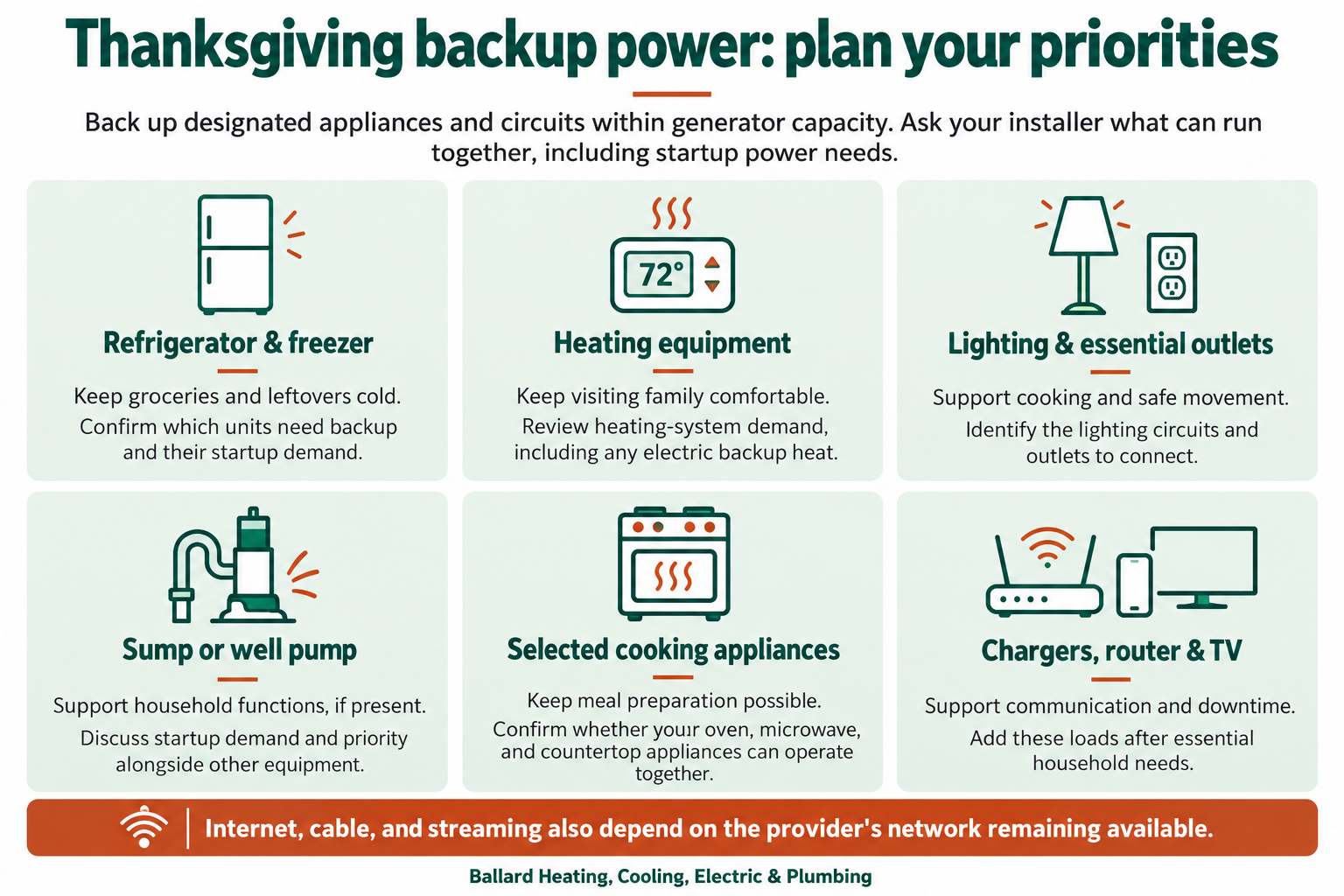
Powering your router or television does not guarantee internet, cable, or streaming service; the provider’s network must also remain available.
A hypothetical hosting plan: A household might prioritize refrigeration, heating, lights, and a microwave while leaving the electric oven out of its backup system. Another might want the oven included. Those choices lead to different requirements, so the holiday menu is useful information for a sizing conversation.
Can a generator run the refrigerator, electric oven, and heat together?
Possibly—but only if the generator and installation support that combination. An electric oven and heating equipment can contribute substantial demand, while refrigerators and other motor-driven equipment may need additional power when starting.
Generator sizing should account for:
- Running power: electricity required while equipment operates normally.
- Starting power: the additional demand some equipment creates as its motor starts.
- Simultaneous use: which appliances may operate together while dinner is cooking.
- Load management: whether the system is designed to temporarily defer a lower-priority appliance when demand is high.
Square footage alone cannot answer those questions. Ballard bases sizing on a load calculation after homeowners decide what they want backed up. The assessment should establish which circuits will receive power and what can run together, including any restrictions the household needs to understand.
How does an automatic standby generator work?
An automatic standby generator is permanently installed outdoors and connected to the home through transfer equipment. When utility power fails, the system detects the loss, starts the generator, and transfers the backed-up circuits to generator power. The automatic transfer switch keeps generator power separated from the utility connection. When utility service returns, the system transfers back.
Startup and transfer take time, so standby power does not mean uninterrupted electricity. Also, “whole-house generator” does not guarantee that every appliance can run simultaneously; coverage depends on the selected equipment and installation.
How does a portable generator compare with standby power?
The main difference for a Thanksgiving host is how much setup and ongoing attention the system requires.
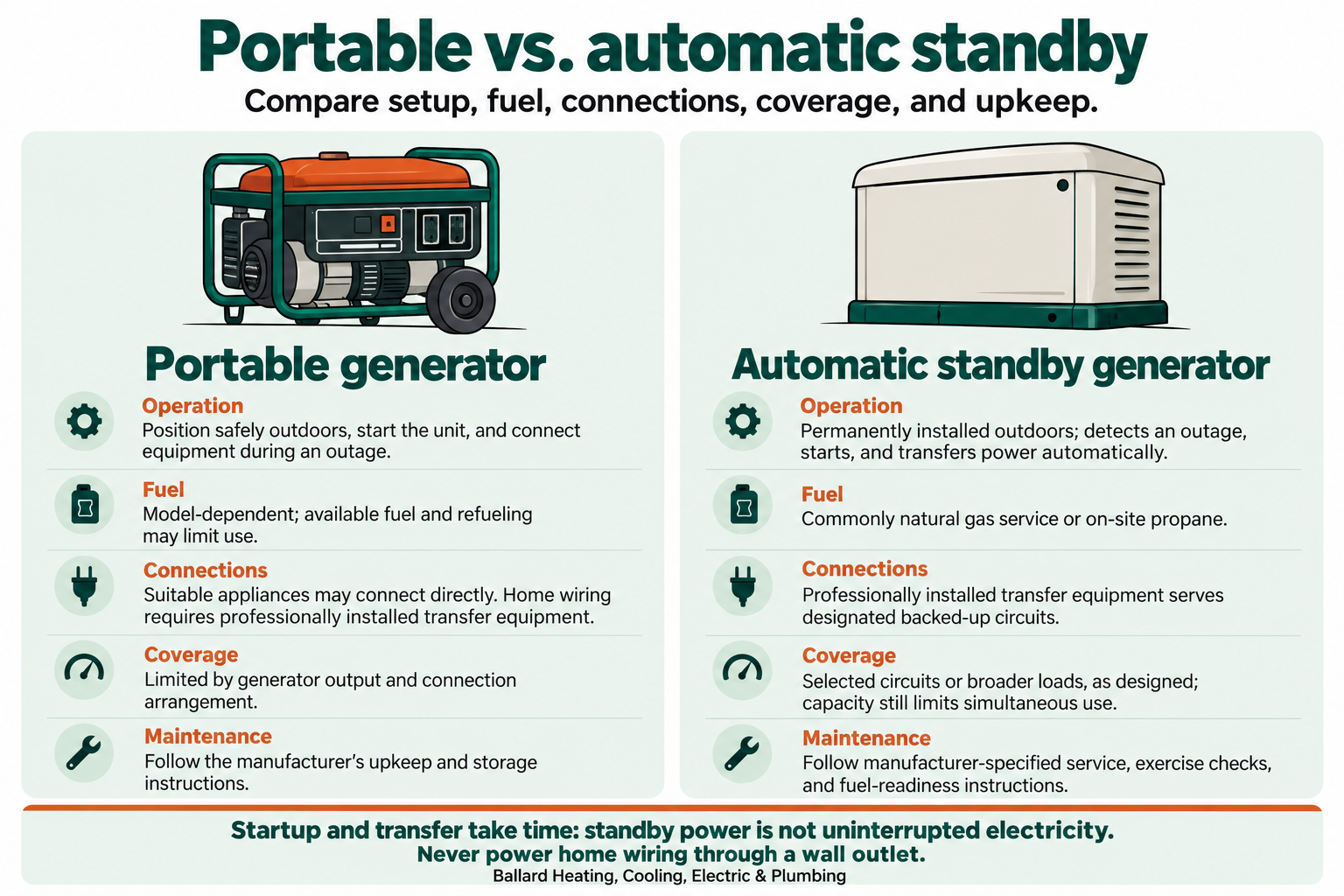
Both options require a power plan and safe operation. Automatic operation can reduce the setup a host must manage while preparing dinner, but it does not remove maintenance responsibilities.
Should a standby generator use natural gas or propane?
The choice depends on available fuel service, supply capacity, and the property. Natural gas uses a utility connection; propane uses fuel stored on-site. Ballard discusses both options and checks adequate supply capacity before quoting.
For natural gas, the assessment should consider the generator alongside other gas appliances that may be operating during Thanksgiving. For propane, discuss tank capacity, delivery access, and the fuel needed for the expected load and outage duration. Neither option provides an unconditional fuel supply: natural gas depends on continued service, while propane depends on the fuel available in the tank.
How long will Thanksgiving food stay safe without power?
With doors kept closed, a refrigerator can keep food safe for up to four hours. A full freezer can maintain a safe temperature for approximately 48 hours, or approximately 24 hours when half full. These estimates assume the food was properly chilled beforehand and the doors remain closed.
During meal preparation, repeated trips into the refrigerator make those conditions harder to maintain. Keep appliance thermometers in the refrigerator and freezer; normal storage targets are 40°F or below and 0°F or below, respectively.
Use the FoodSafety.gov outage food chart to assess individual items. Its guidance calls for discarding refrigerated perishables such as meat, poultry, eggs, and leftovers after four hours without power. Never taste food to determine whether it is safe. Restoring electricity does not make food safe again if it has already been held under unsafe conditions.
What should generator owners check before guests arrive?
If you already own a standby generator, check maintenance status and operating readiness before the holiday rush. A generator that ran during a previous outage still needs care according to its own manual and service history.
Use this before-guests-arrive checklist:
- Review service records. Check whether maintenance is due by calendar time or accumulated operating hours.
- Look for unresolved alerts. Have fault messages, failed starts, or unusual operation assessed before relying on the unit.
- Review the exercise schedule. Confirm that scheduled automatic runs are occurring as expected for your model.
- Check fuel readiness. Coordinate propane supply when applicable and have fuel-system concerns evaluated by a qualified professional.
- Review the area around the unit. Keep required airflow and access clear according to the installation instructions; avoid adding decorations or storage nearby.
- Confirm the power plan. Identify the backed-up circuits and discuss whether a professional transfer-and-load test is appropriate for the appliances you plan to use.
A successful exercise run does not necessarily test the planned household loads; exercise features differ by model. Leave electrical testing and transfer-switch work to qualified professionals. Ballard’s guidance on how to prepare your generator for fall storms provides additional preparation context; follow your own equipment instructions for service intervals and clearances.
How early should you plan backup generator installation?
Start planning well before the holiday and ask for a project-specific schedule. A consultation needs to resolve the home’s power priorities, equipment selection, location, electrical connections, and fuel supply before an installation date can be assessed.
Equipment availability, site preparation, electrical and fuel work, required permits, inspections, and contractor scheduling can all affect completion. An installation consultation is the right place to discuss those dependencies; it is not a guarantee that a new system will be ready by Thanksgiving.
Ballard offers whole-house generator installation, replacement, repair, and maintenance. For a new installation, a useful proposal should identify the backed-up loads, transfer equipment, fuel work, final testing, and operating instructions.
What affects the cost of installing a backup generator?
The generator is one part of the total project. Capacity, transfer equipment, site preparation, fuel-line or tank work, electrical modifications, installation access, permits, and startup testing can affect the installed scope.
Compare proposals that address the same household priorities. Backing up essential circuits and supporting a broader combination of cooking, heating, and other appliances may require different equipment or load-management arrangements. Ask what is included, what is excluded, and how changes will be approved.
What generator safety precautions matter in rainy weather?
Rain does not change the need for safe outdoor operation. Portable generators and permanent standby installations have different requirements.
Portable generator precautions
- Operate outdoors, at least 20 feet from homes and buildings, with exhaust directed away from doors, windows, and vents.
- Never run a portable generator in a home, garage, shed, or other enclosed space, even with doors or windows open.
- Have working battery-operated carbon monoxide alarms or alarms with battery backup. If an alarm sounds, get everyone outside immediately and call 911.
- Keep the unit dry. Follow its wet-weather instructions. CPSC describes open, canopy-like protection on a dry surface where water cannot reach or pool beneath the equipment. Protection must preserve ventilation and safe placement; never move the generator into a garage to escape the rain.
- Never plug a generator into a household wall outlet. This dangerous practice, called backfeeding, can energize utility lines. Home-wiring connections and transfer equipment belong with qualified professionals.
- Use properly rated outdoor cords for direct appliance connections, and turn the generator off and let it cool before refueling.
Permanent standby generator precautions
A standby unit’s location must follow its specific installation manual and applicable local requirements. Have the contractor confirm the permitting and inspection requirements for your address. The installer should evaluate exhaust entry points, ventilation, service access, and exposure to runoff or flooding. The portable-generator 20-foot operating rule is not a universal standby clearance specification.
Inside the house, backup power does not increase individual circuit capacity. Kitchen appliances and holiday lighting still need appropriate connections. Ballard’s Thanksgiving electrical safety tips cover additional kitchen and decorating considerations.
Ballard Heating, Cooling, Electric & Plumbing has served greater Puget Sound since 1993. Its service area includes Seattle and surrounding communities in King and Snohomish counties, including Lynnwood, Redmond, Bellevue, and Shoreline.
FAQs
Will a standby generator work if I am away picking up guests?
An automatic standby system is designed to detect an outage and start without someone being home. It must be correctly configured, maintained, fueled, and ready for automatic operation. It supplies the loads included in its installation.
How long can a standby generator run during an outage?
Runtime depends on the model, electrical load, fuel availability, and required maintenance. Extended operation may require shutdowns for checks or service. Follow the owner’s manual, including shutdown instructions, and only approach the unit when surrounding conditions permit safe access.
Does a gas furnace need electricity during an outage?
Most modern gas furnaces need electricity for components such as controls and the blower. A gas supply alone does not establish that heating will work. Include the actual heating equipment and its electrical needs in the generator assessment.
Is backing up only essential circuits an option?
Yes. A system can be designed around selected circuits, such as refrigeration, heating, lighting, and a pump where needed. List the appliances you want to use during Thanksgiving and have the installer establish what that plan requires.
Do I still need an outage kit if I own a generator?
Yes. Keep flashlights, batteries, drinking water, blankets, and food that does not require cooking available for household members and guests. A generator does not replace broader storm preparation or provide uninterrupted electricity.
Plan backup power before the holiday gathering
To discuss backup power for your Thanksgiving plans or arrange service for an existing generator, contact Ballard at 206-784-8101. Ballard Heating, Cooling, Electric & Plumbing can help you evaluate your home’s needs and discuss the next steps.
Financing options available
Flexible financing options for home upgrades.