Fall Heating and Air Conditioning Maintenance for Seattle-Area Homes: What You Can Do Yourself and When to Call a Pro
Get your Seattle-area home ready for the fall heating season with practical furnace and heat pump maintenance tips. Learn which tasks you can safely handle yourself, from replacing air filters to clearing outdoor units, and when to call a professional for inspections, cleaning, and repairs.

Fall heating maintenance for Seattle-area homes comes in two parts. You can change the filter, clear leaves from the heat pump, check the vents and test the carbon monoxide alarms. A professional should clean the blower, check electrical and gas components, and confirm the system heats safely. Early fall is the best time, before the long heating season starts.
Why Does Fall Maintenance Matter So Much Here?
Fall maintenance matters because the Puget Sound heating season is long. Western Washington's winters are mild, but they're long and damp, and many homes run the heat from October well into spring. A furnace or heat pump that starts the season clean and properly adjusted has an easier time through all those months.
ENERGY STAR recommends scheduling the heating check-up in fall, partly because contractors get busy once cold weather arrives.[9]
Dirt, dust and debris are the number one cause of air conditioning and heating system breakdowns. Much of fall maintenance, whether you do it or a technician does, is about keeping them out of the system.
What Fall Maintenance Can You Do Yourself?
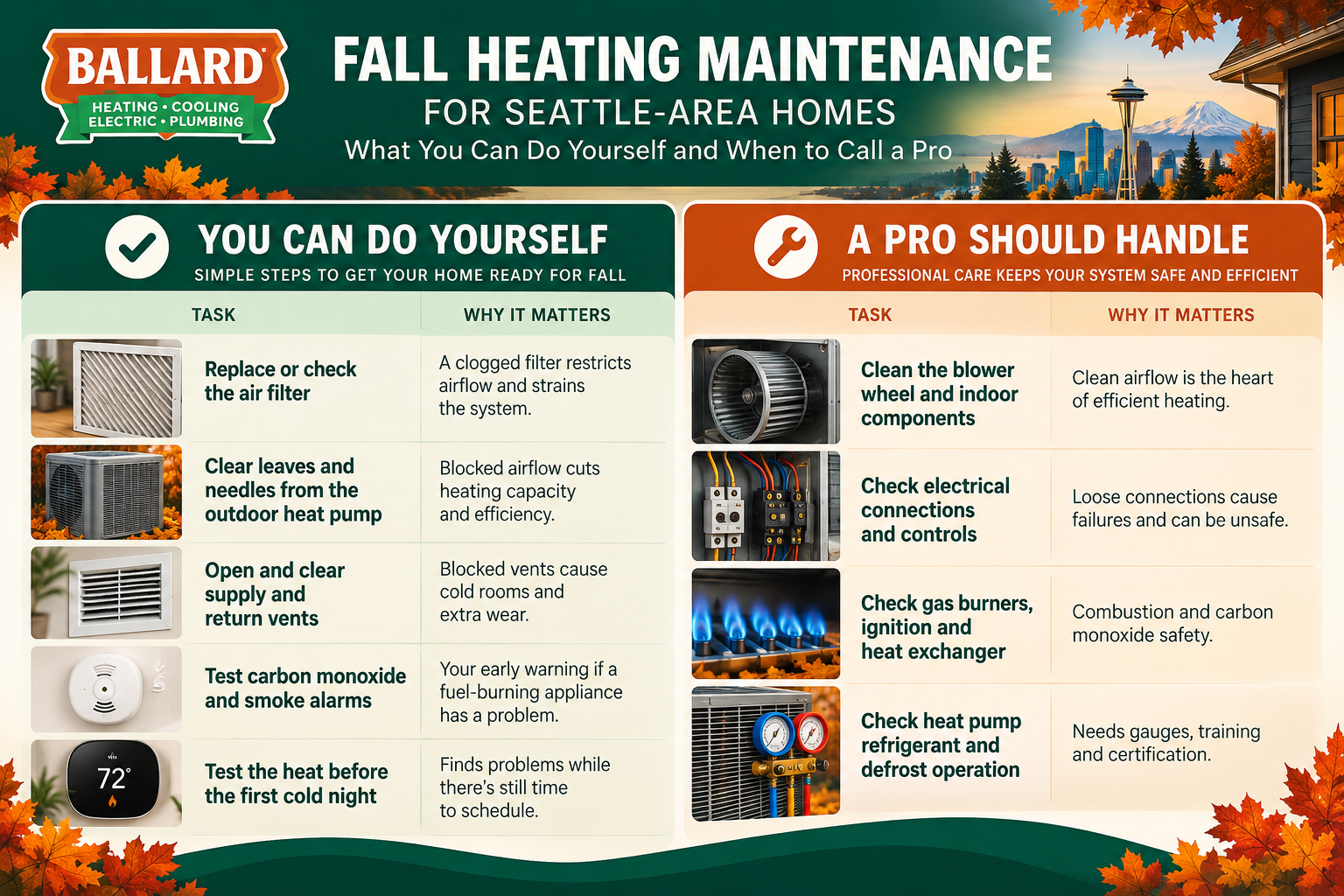
Here's how the work divides:
How Often Should You Change the Filter in Fall?
Check the filter monthly and change it whenever it looks dirty. ENERGY STAR recommends inspecting filters monthly and notes that a dirty filter raises energy costs and can damage equipment. Late summer wildfire smoke can load a filter quickly, so if the Seattle area had smoky weeks, start the heating season with a fresh one.
Use the size and rating your system is designed for. A very restrictive filter can choke airflow on some systems, so ask your technician what your equipment can handle.
Should You Clear Leaves From Your Heat Pump?
Yes. A heat pump's outdoor unit pulls heat from outdoor air through its coil, and in fall that coil is a magnet for maple leaves, fir needles and cottonwood fluff. Keep the unit and the space around it clear, with at least a couple of feet of open space on all sides unless your manufacturer says otherwise.
Turn off the power to the outdoor unit before clearing anything close to it. Use your hands or a soft brush on the outside of the coil, and never pry or spray between the fins with high pressure. Anything more involved belongs in a professional cleaning.
In winter, a heat pump periodically runs a defrost cycle on cold, damp mornings, which can make the unit steam or pause for a few minutes. That's normal. Ice that builds up and stays is not.
What Else Should You Check Around the House?
A few quick checks round out the homeowner list:
- Vents: Make sure furniture, rugs and stored items aren't blocking supply or return vents.
- Thermostat: Switch to heat and raise the setting a few degrees to confirm the system responds. On a heat pump, watch for auxiliary or emergency heat running for long stretches.
- Condensate drain: High-efficiency furnaces and heat pumps produce water. Check that the drain line isn't leaking or backed up.
- Carbon monoxide alarms: Test them and replace batteries. Washington requires carbon monoxide alarms in most homes and whenever a home is sold.[10] Our post on carbon monoxide leaks in your home explains the warning signs.
A brief burning smell the first time the heat runs is usually dust burning off. If it lingers, or smells electrical or like gas, turn the system off and call for service.
What Should a Professional Fall Tune-Up Include?
A professional visit should actively clean and care for the system, not just look it over. That's the difference between a Deep Clean and Tune-Up and a quick visit.
The step that sets a real heating Deep Clean apart is pulling and cleaning the blower wheel. The blower wheel is the drum-shaped fan that pushes air through your ducts. Dust packs into its curved blades over time and chokes airflow. ENERGY STAR notes that airflow problems can reduce a system's efficiency by up to 15 percent. Some maintenance visits skip this step or charge extra for it, even though clean airflow is one of the most valuable things maintenance can deliver.
A thorough fall visit also covers:
- For gas furnaces: burners, ignition, flame quality, venting and the heat exchanger. EPA recommends having fuel-burning furnaces and fireplaces checked and serviced before each heating season to protect against carbon monoxide.[5]
- For heat pumps: refrigerant operation, the reversing valve, defrost controls and outdoor coil condition.
- For all systems: electrical connections, safety controls, thermostat calibration and the condensate drain.
Learn more about Ballard's furnace maintenance and heat pump maintenance.
When Should You Call a Pro Instead of Doing It Yourself?
Call a professional for anything inside the equipment cabinet, anything involving gas, refrigerant or electrical connections, and any time something seems off. Signs that shouldn't wait include:
- A gas smell (leave the house and call your gas utility from outside)
- A carbon monoxide alarm going off
- A burning or electrical smell that doesn't fade
- The system short-cycling, making new noises, or failing to heat
- Ice that won't clear from a heat pump
Maintenance won't prevent every breakdown, but it reduces the preventable ones. Ballard's 5 Star Maintenance plans keep those visits on the calendar.
Frequently Asked Questions
When is the best time to schedule fall heating maintenance?
September or early October, before the heating season is in full swing. Technicians have more scheduling room, and any repairs can be made before you depend on the heat every day.
Does a heat pump need maintenance in fall and spring?
A heat pump heats in winter and cools in summer, so many homeowners schedule maintenance before each season. At minimum, an annual visit is recommended, and a fall visit prepares it for the long heating season.
Can I clean my furnace myself?
You can change the filter and keep the area around the furnace clear and vacuumed. Cleaning the blower, burners and internal components requires disassembly and knowledge of gas and electrical safety, so leave that to a technician.
Why does my heat smell when I first turn it on?
Dust that settled on the heating components over the summer burns off the first time the system runs. The smell should fade within an hour. A lingering burning, electrical or gas smell means turning the system off and calling a professional.
Do I need a carbon monoxide alarm if I have a heat pump?
If your home has any fuel-burning appliance, such as a gas furnace backup, gas fireplace, gas water heater or attached garage, a carbon monoxide alarm is important. Washington requires them in most homes and whenever a home is sold.
Get Your Heating System Ready for Fall
A fall Deep Clean and Tune-Up gets your furnace or heat pump ready for the long Puget Sound heating season. Schedule furnace maintenance with Ballard, or request a heat pump visit online.
Financing options available
Flexible financing options for home upgrades.