
Step-by-Step Guide to Thermostat Wiring
Learn how thermostat wiring works with this step-by-step homeowner guide. Understand wire colors and terminal letters, identify different thermostat wiring types, safely replace a low-voltage thermostat, troubleshoot common problems, and know when professional installation is necessary.
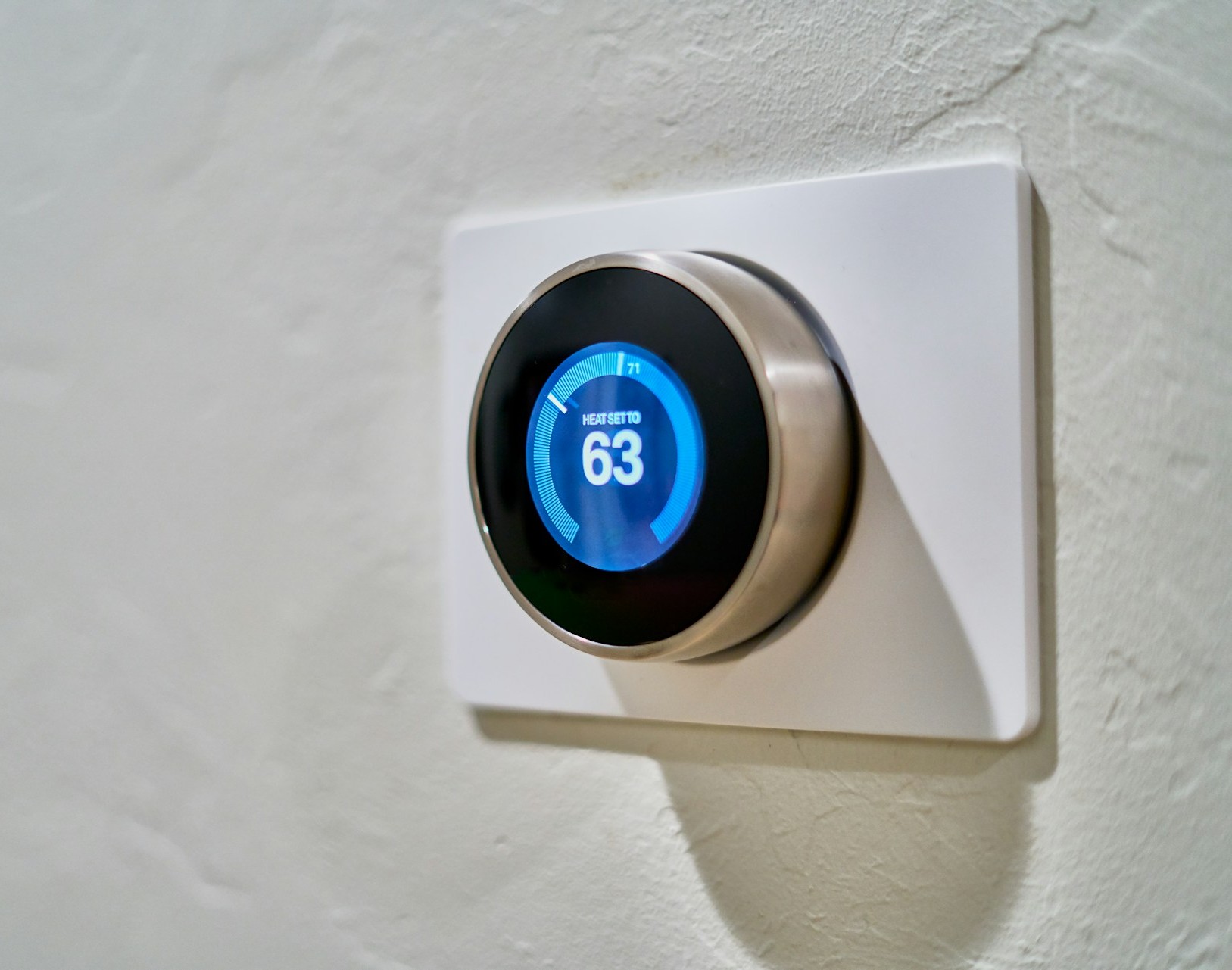
Thermostat wiring is manageable for most homeowners if the system is low voltage (24 volts), which covers most furnaces, heat pumps and central air conditioners. Turn off power, photograph and label each wire by the letter on its terminal, then connect each one to the matching terminal on the new thermostat. Line-voltage thermostats on baseboard heaters are a different job for an electrician.
What Type of Thermostat Wiring Do You Have?
Start by identifying your system, because the type decides whether this is a do-it-yourself job. There are three kinds of thermostat wiring in homes:
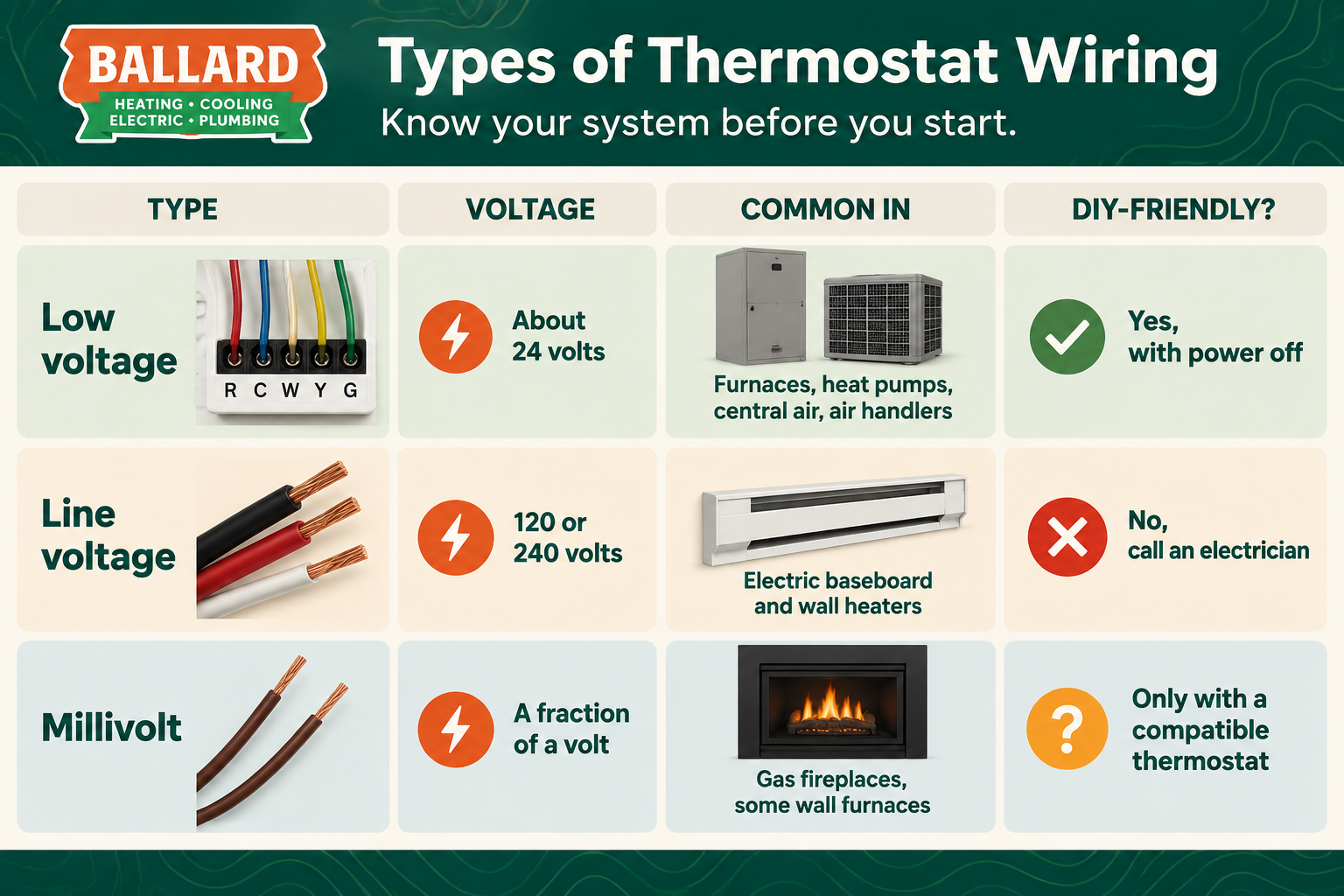
Many Seattle-area homes, especially older homes and condos, heat with electric baseboard heaters on line-voltage thermostats. If that's your setup, stop here. Those thermostats carry household current that can cause serious shock, and swapping them is work for a qualified electrician. Ballard's electrical services team can help.
What Do the Thermostat Wire Letters Mean?
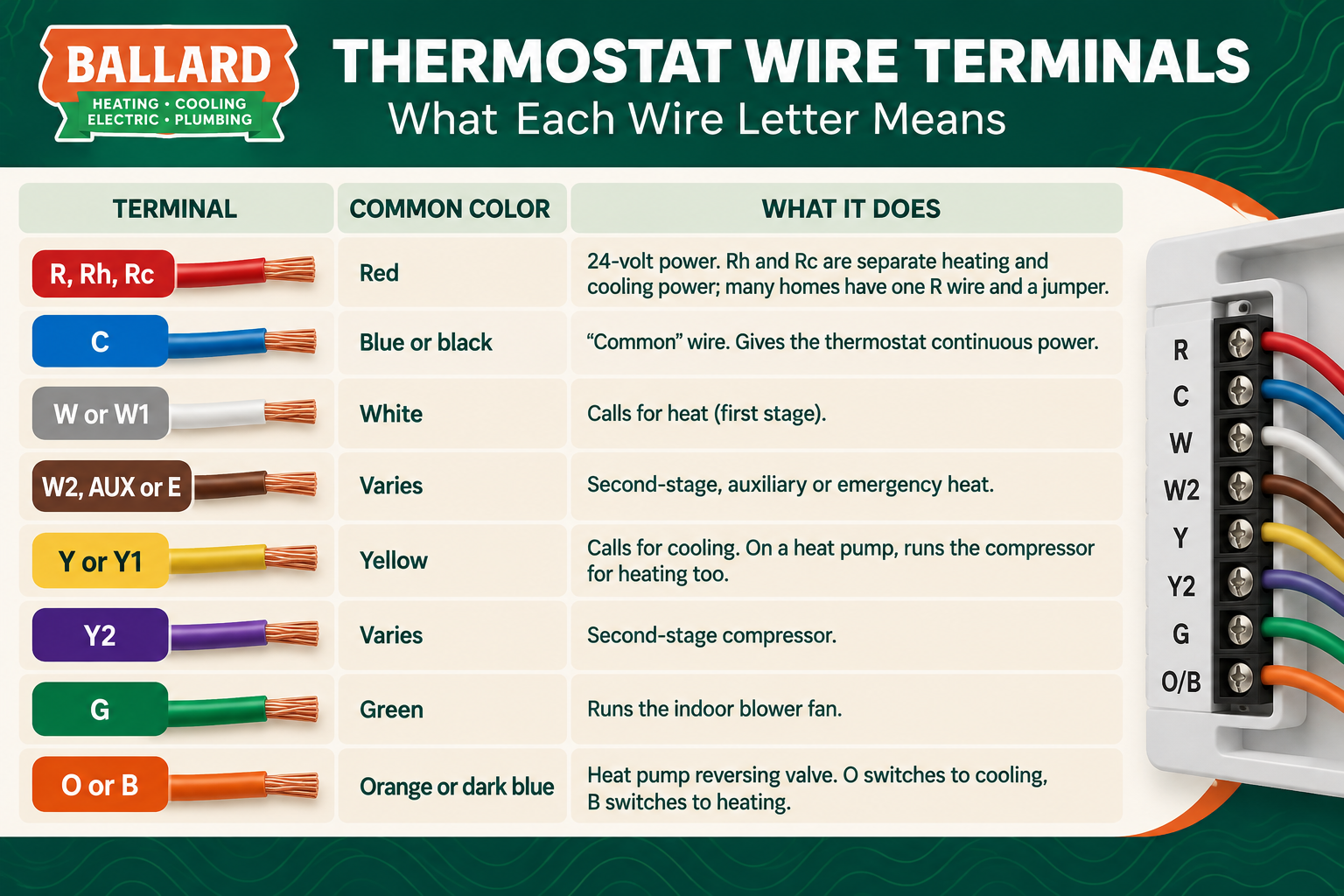
The letters on the terminals tell you what each wire does. Wire colors often follow a convention, but installers don't always follow it, so always go by the terminal letter, not the color.
Do You Need a C Wire?
Many smart thermostats need a C wire, because Wi-Fi and a lit screen need steady power that batteries can't provide. If there's no wire on a C terminal, look behind the thermostat and at the furnace or air handler for an unused wire tucked into the bundle. It can often be connected at both ends to serve as the C wire.
If there's no spare wire, options include a power adapter kit from the thermostat manufacturer or running new thermostat cable. Both involve connections at the furnace or air handler, so this is a good point to call a technician if you're not comfortable working at the equipment.
How Do You Wire a Low-Voltage Thermostat, Step by Step?
These steps apply to replacing a thermostat on a low-voltage system. Your new thermostat's instructions take priority where they differ.
- Turn off the power. Switch off the breaker for the furnace or air handler, and the outdoor unit if you have one, or use the service switch at the furnace. Confirm the old thermostat's screen goes blank.
- Remove the old thermostat's cover and take a clear photo of the wires on their terminals. This photo is your backup.
- Label each wire with the letter of the terminal it's attached to. Many new thermostats include stickers.
- Check for line voltage. If you find thick wires, wire nuts or a 120V/240V label, stop and put the cover back on.
- Disconnect the wires and remove the old base. Wrap the cable around a pencil so it can't fall back into the wall.
- Mount the new base, threading the wires through and leveling it if the model requires it.
- Connect each wire to the matching terminal on the new base. Leave any unused wires unconnected and capped or folded back.
- Attach the thermostat, restore power, and follow the setup prompts. Tell it your system type: furnace, heat pump, or heat pump with auxiliary heat.
- Test every mode. Run heat, cool and fan separately, and make sure the outdoor unit and indoor blower respond as expected.
What Are the Most Common Thermostat Wiring Mistakes?
Most problems after a thermostat swap come from a few mistakes:
- O/B set wrong on a heat pump. The system heats when you ask for cooling, and cools when you ask for heat. Change the reversing valve setting in the thermostat's menu.
- Auxiliary heat misconfigured. On heat pumps with backup electric heat, a wrong setting can run the expensive backup heat far more than needed. This one often goes unnoticed until the power bill arrives.
- Rc jumper removed or left in the wrong place. A system with one transformer needs the jumper; a system with two doesn't.
- R touching C. Shorting these two, even briefly with power on, can blow the small fuse on the furnace control board. If the system goes dead after an install, that fuse is a likely cause.
When Should You Stop and Call a Professional?
Stop and call a professional if any of these apply:
- The thermostat is line voltage (baseboard or wall heaters).
- You need a C wire and there's no spare conductor.
- Your system is a dual-fuel setup (heat pump with a gas furnace backup), has zoning, or uses a proprietary communicating thermostat.
- The system won't run after the swap, or runs in the wrong mode.
- Wiring at the furnace, air handler or outdoor unit needs to change.
A misconfigured heat pump can run inefficiently for months without obvious symptoms, so a technician's setup is often worth it. Ballard's heat pump repair technicians can confirm the wiring and settings, and our heating services team handles furnaces and air handlers.
Why Upgrade to a Smart Thermostat?
A properly installed and configured smart thermostat can help reduce heating and cooling costs by adjusting temperatures when you're away or asleep. ENERGY STAR certifies smart thermostats that meet its efficiency criteria. Once yours is wired, our guide to getting the most from your smart thermostat covers the settings that matter.
Frequently Asked Questions
Can I install a smart thermostat myself?
On most low-voltage systems, yes, if you turn off power, label the wires and follow the instructions. Line-voltage systems, homes without a C wire and complex heat pump or dual-fuel systems are better left to a professional.
What happens if thermostat wires are connected wrong?
The system may not start, may run the wrong mode, or may run the fan constantly. Shorting R and C can blow the fuse on the furnace control board. Turn the power off, check the wiring against your photo, and call a technician if it still won't run.
What's the difference between O and B on a heat pump?
Both control the heat pump's reversing valve, which switches between heating and cooling. O energizes the valve for cooling, used by most manufacturers. B energizes it for heating. The thermostat setting has to match your equipment.
Why is my new thermostat blank?
The most common reasons are no C wire, a tripped breaker or service switch, a loose R wire, or a blown fuse on the furnace control board. Check the power first, then the wiring.
Can I put a smart thermostat on baseboard heaters?
Only one designed for line voltage. Standard smart thermostats are made for 24-volt systems and can be damaged, or create a hazard, on a baseboard heater circuit. Line-voltage installations should be done by an electrician.
Get Help With Your Thermostat
If your thermostat swap turned complicated, or you'd like it done right the first time, Ballard's technicians can install, wire and configure it for your system. Request heating service online.
Financing options available
Flexible financing options for home upgrades.